Organic Mattresses · Adjustable Sleep
Naturepedic Organic Mattresses: What to Check Before Using an Adjustable Base
An adjustable base can bring a welcome sense of intention to bedtime: a raised head for reading, a gentle lift beneath the legs, or simply a change of posture that feels more comfortable. But a mattress must be designed to move with its foundation. Before placing a Naturepedic organic mattress on an adjustable base, look beyond its materials and appearance to its construction, flexibility, dimensions, and the precise guidance issued for that model.
Published November 15, 2026
Organic materials may be the reason a mattress first catches your attention, but they are only one part of a successful sleep setup. When the foundation beneath it moves, the mattress has to respond repeatedly without shifting, buckling, or placing undue strain on its internal layers. A mattress that feels beautifully supportive on a flat platform is not automatically suitable for an adjustable base.
That distinction matters when considering a Naturepedic mattress. The brand offers different models and constructions, and specifications can vary from one model to another. It is best to assess the exact mattress you own or plan to buy, then compare its requirements with those of the exact adjustable base. A broad claim about a brand, a material, or an entire mattress category cannot replace model-specific instructions.
This guide explains what to check before combining an organic mattress with a moving base, how to assess fit and support, and what questions to ask when the paperwork leaves room for interpretation. It is an informational starting point, not a substitute for current manufacturer guidance or professional advice about a medical need.
Start with the exact mattress model
“Naturepedic mattress” is not a sufficiently precise description for a compatibility decision. Identify the full model name, size, approximate purchase date, and any relevant version or collection details. Product lines can change over time, and a retailer’s short description may not include every restriction that appears in the official care or warranty documentation.
Look for the owner’s manual, product specification page, warranty, and care instructions. Search those materials for terms such as “adjustable base,” “adjustable foundation,” “flexible foundation,” “articulating base,” or “compatible bed frame.” If the wording is unclear, contact the manufacturer or retailer with the model details rather than relying on general advice for organic mattresses.
Written confirmation is particularly useful if you are buying both pieces separately, using a base from another brand, or setting up an older mattress. Ask whether the mattress is approved for the specific type of articulation your base provides, whether there are limits on repeated bending, and whether the stated warranty conditions require a particular kind of support.
Keep the answer with your purchase records. If a future service or warranty question arises, having the relevant documentation and the base’s model information can make it easier to explain how the bed was configured.
Why construction and flexibility matter
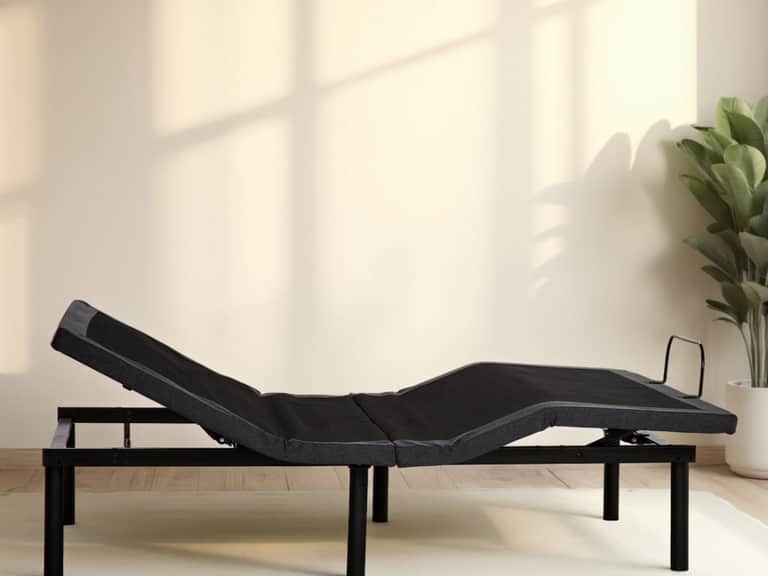
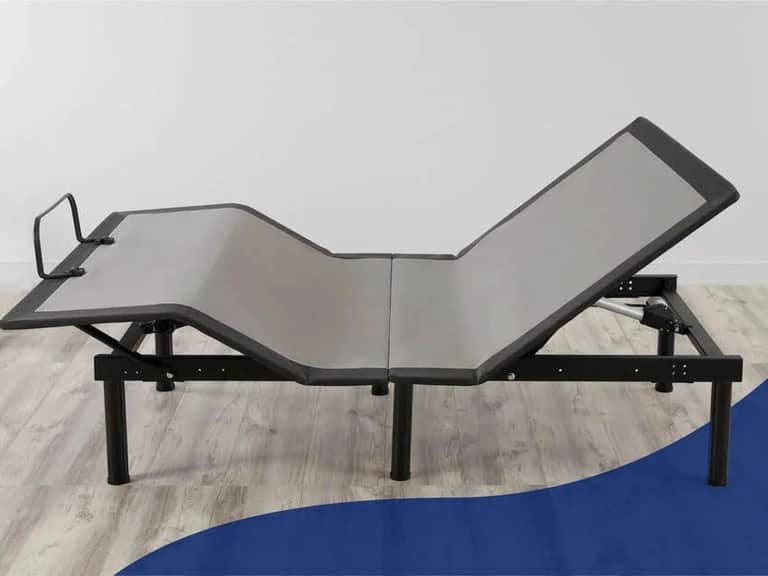
An adjustable base changes the plane beneath the mattress. Depending on its design, separate sections rise or lower at the head and feet, creating a curve rather than the uniformly flat support of a traditional foundation. The mattress must bend at the base’s joints while remaining adequately supported across its surface.
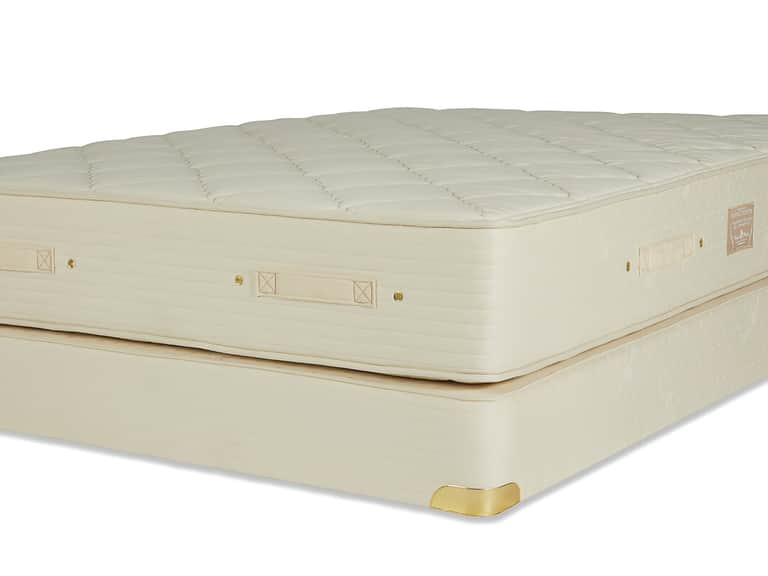
Mattresses differ in how they achieve comfort and structure. A design may include a flexible comfort layer over a more supportive core, multiple layers joined together, a quilted surface, edge reinforcement, or other components that respond differently to repeated movement. Even two mattresses made with broadly similar materials can behave differently because of their thickness, layer arrangement, cover, and overall construction.
Organic or natural materials do not, by themselves, establish whether a mattress can flex. Nor does a mattress’s ability to compress when someone lies down prove that it can safely accommodate the angles and repeated motion of an adjustable base. The useful question is not simply “Is it organic?” but “Does this exact construction have approval for this kind of movement?”
Flexibility is also not a matter of softness alone. A mattress can feel plush yet contain components that the manufacturer does not recommend bending. Conversely, a mattress that feels relatively firm may still be engineered for use on an adjustable foundation. Follow the model’s instructions rather than trying to infer compatibility from touch or showroom impressions.
Match the mattress to the base’s movement
Adjustable bases vary in their articulation, shape, and operating features. Some raise the head and feet independently; others include additional head-tilt movement or preset positions. The range of motion, joint placement, platform design, and instructions for mattress retention can all influence the demands placed on the mattress.
Read the base manual as carefully as the mattress documentation. Confirm the permitted mattress types, minimum or maximum dimensions if stated, weight limits, and any directions about securing the mattress. A mattress that is approved for one adjustable foundation should not be assumed to work with every other model. The base’s own manufacturer may specify limitations that are separate from the mattress warranty.
Make sure the mattress dimensions correspond to the base. A mismatch can leave the mattress unsupported at the edges or cause it to move during elevation. In a split configuration, check whether the base requires two mattresses, a particular size, or a specific arrangement. If two sleeping surfaces move independently, confirm that the selected mattress format is appropriate for that design.
As a practical example of the details worth reviewing, the Adjustable Base 2023 is described as having a wireless remote, position presets, and options for a single larger mattress moving together or two independent sides. Those features describe the base; they do not establish that any particular Naturepedic model is compatible. Verify the mattress approval and the base’s complete specifications before pairing them.
Thickness, profile, and fit
Mattress thickness can affect how a bed looks and moves, but there is no universal thickness rule that guarantees compatibility. A taller or heavier mattress may respond differently as the base articulates, while the base manufacturer may set its own limits. Check both sets of documentation for any stated height, weight, or profile requirements.
Measure the mattress rather than relying on a remembered product listing, especially if it has been in use for several years or has a topper. Include any removable layer only if the manufacturers’ guidance treats it as part of the approved setup. A topper can alter how the surface bends or stays in place, so ask before adding one to an arrangement that has not been evaluated with it.
Fit also includes the bed frame and the room. Confirm that the adjustable base sits correctly within the frame, that its moving sections have clearance, and that cables are routed away from hinges and pinch points. If the base is intended to stand independently or drop into an existing frame, follow its installation instructions exactly. A frame that looks compatible from above may still interfere with the base’s movement underneath.
For split or dual-sided arrangements, check the combined width, the position of the centre support, and the space needed for the bases to move. A neat visual fit while the bed is flat does not necessarily mean there is sufficient clearance through the full range of motion.
Read warranty language before setting up
Warranty terms are not merely paperwork to revisit if something goes wrong. They can describe the foundation conditions required to support the mattress properly. Look for instructions about compatible bases, foundation spacing, centre support, maximum gaps between slats, and what the manufacturer considers appropriate use.
Do not assume that “adjustable base compatible” means every configuration is covered without conditions. There may be requirements about the base’s surface, the mattress size, or the way the mattress is supported. Equally, do not infer a prohibition from an ambiguous phrase in a retailer listing: ask the manufacturer to clarify the relevant model and situation.
Save the product page or manual available at the time of purchase, along with invoices, serial or model information, and any written compatibility response. If the mattress and base come from different companies, retain both manufacturers’ guidance. Clear records can help distinguish a product issue from a setup that did not follow the stated requirements.
A careful setup, step by step
- Identify the mattress precisely. Record its full model name, size, and any version information available on the label or purchase documents.
- Locate current instructions. Review the mattress manual, care guide, product specifications, and warranty, not just a general description.
- Confirm base requirements. Check the base manual for approved mattress types, dimensions, weight limits, installation rules, and any restrictions on use.
- Ask about uncertainties. Provide both model names and ask for a clear answer about compatibility, movement range, and warranty implications.
- Install according to the manuals. Use the specified frame or legs, secure the base as directed, and keep cords clear of moving parts.
- Test gently. With the area clear, operate the base through its positions while observing whether the mattress remains centred and supported. Stop if anything binds, slips, or appears strained.
Testing is not a substitute for manufacturer approval. It is a sensible final check after the setup has been confirmed, not a way to discover whether a mattress can tolerate a base through repeated trial and error.
What to observe when the base moves
Once the system is assembled and approved, pay attention to how it behaves. The mattress should remain appropriately positioned on the platform, and its surface should respond without obvious catching or pulling. Listen for unusual sounds from the base and watch for cables, bedding, or nearby furniture interfering with movement.
Use the controls as directed, and avoid sitting or standing on an elevated section unless the manuals explicitly permit it. Keep children and pets away from moving joints and mechanisms. If a mattress shifts repeatedly, a component strains, or the base stops unexpectedly, return it to a safe flat position if possible and consult the manufacturers’ instructions before continuing.
Routine checks are useful after moving the bed, changing the frame, or adding a topper. Confirm that the base remains stable, the mattress is centred, and cords are still safely routed. Do not modify the mattress or base to force a fit; cutting, bending, or altering components may create safety issues and may affect warranty coverage.
Comfort is personal; support is structural
An adjustable base can change the way a mattress feels because it changes the sleeper’s position and the distribution of pressure. A raised head may feel useful for reading, while a different angle may suit another routine. Those preferences are individual, and a position that feels comfortable to one sleeper may not feel right to another.
Compatibility, however, is a structural question before it is a comfort question. A pleasant first impression does not confirm that the mattress is supported as intended or that the arrangement meets the warranty conditions. Conversely, a manufacturer-approved combination may still require time and personal adjustment to find a comfortable position.
If you are considering an adjustable base to address a health concern, speak with a qualified health professional about whether a particular sleeping position is appropriate for you. A bed’s motion is not a diagnosis or treatment, and promotional descriptions should not be treated as medical evidence.
Questions to ask before you buy
- Is this exact Naturepedic model approved for use with an adjustable base?
- Does approval apply to the specific base model and its full range of movement?
- Are there limits on mattress thickness, weight, or the type of frame beneath the base?
- Does the mattress warranty require a particular foundation or support arrangement?
- Can the mattress be used in a split configuration, and are there size or construction restrictions?
- Will adding a topper, protector, or other layer affect movement or compatibility?
- Who should be contacted if the mattress shifts, appears strained, or the base behaves unexpectedly?
When possible, request answers in writing. A short, precise question that names both products is more useful than a general enquiry about whether “organic mattresses” work on adjustable beds.
Common assumptions to leave behind
“Natural materials are flexible, so the mattress will bend.” Material names alone do not tell you how a complete mattress is constructed or whether it is approved for repeated articulation.
“It fits the frame, so it fits the base.” Physical dimensions are only one part of the assessment. The mattress must also be compatible with the base’s movement and support conditions.
“A universal base works with every mattress.” A base marketed for broad compatibility still has instructions and limits. The mattress manufacturer may also impose separate conditions.
“If it moves once without a problem, it is safe.” A single test cannot establish long-term suitability or warranty coverage. Use approved combinations and follow the manuals.
“Organic means maintenance-free.” Organic material preferences do not remove the need for ordinary care. Follow the mattress care label, protect it appropriately, and keep the base clean and unobstructed.
A considered pairing begins with clarity
The appeal of an organic mattress lies in its materials, comfort, and the values behind its construction. An adjustable base brings another dimension: movement tailored to the rhythm of a room and its sleeper. When those elements are chosen together, the most elegant approach is also the most practical—begin with exact model information, read both manufacturers’ requirements, and confirm the pairing before use.
For a Naturepedic mattress, avoid making a blanket assumption from the brand name or from the word “organic.” Models can differ, as can adjustable bases. Verify flexibility and construction guidance for the specific mattress, check the base’s movement and fit requirements, and preserve the written instructions that support your decision.
Once compatibility is established, thoughtful installation and periodic checks help the whole arrangement work as intended. The result is not simply a bed that changes shape, but a sleep setup chosen with care: materials considered, mechanics understood, and comfort grounded in sound guidance.