Mattress construction & comfort
What to Consider When Exploring the Vispring Baronet Superb
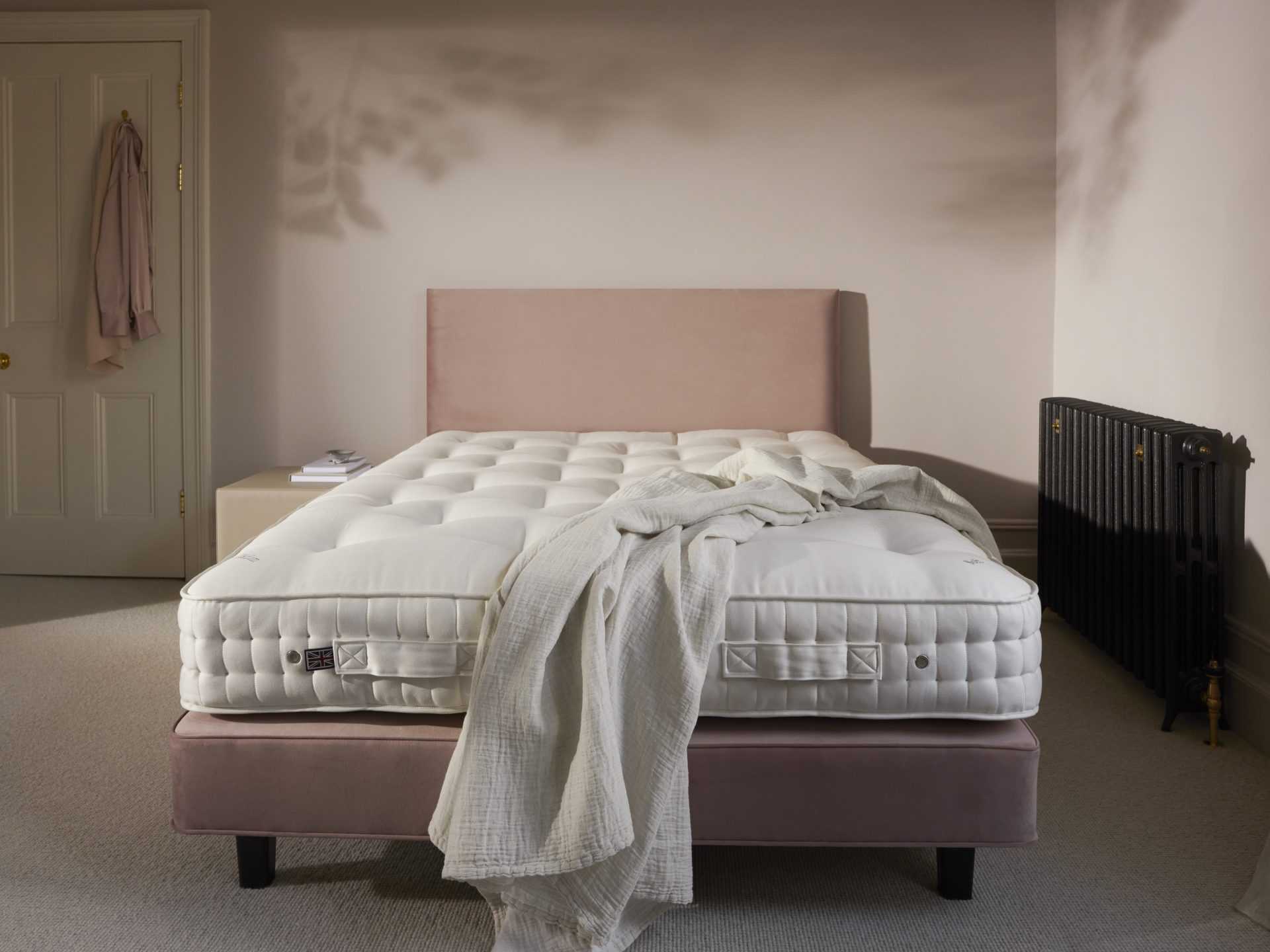
A mattress is not merely a place to sleep; it is a layered system that meets the body night after night. The Vispring Baronet Superb offers a useful lens for examining what matters in an innerspring mattress: how its support is built, how its comfort layers feel, and whether its design suits the person who will use it.
Published October 30, 2026
In a well-considered bedroom, the mattress is both the most practical object and the least visible design decision. It determines how the body meets the bed, whether turning over feels effortless, and how the room’s promise of rest holds up after lights out. A handsome name or a long list of materials cannot answer the most important question on its own: does the mattress feel right for you?
The Vispring Baronet Superb is a useful example for asking that question with care. Rather than treating a mattress as a single block of “firmness,” it helps to look at the individual elements that shape the experience: the spring unit, the comfort fillings, the upholstery and construction, and the way those elements interact with body shape, sleep position, bedding, and the bed base.
This guide is an educational framework, not a substitute for current manufacturer specifications or an in-person assessment. Mattress models and specifications can vary by size, configuration, and market, so verify the details for the exact version you are considering. The most valuable decision is an informed one—grounded in your needs rather than in claims that promise a universal answer.
Start with the mattress as a system
An innerspring mattress combines a spring system with comfort layers placed above, below, or around it. The springs contribute support and responsiveness; the upper layers influence cushioning, pressure relief, temperature perception, and the way the surface feels when you settle in. Upholstery, stitching, quilting, and the mattress border also play a role in the finished feel and in how the mattress holds together over time.
It is tempting to reduce mattress construction to a headline number—spring count, firmness rating, or thickness—but each is only one clue. Spring count, for instance, needs context: the type and size of springs, their arrangement, wire characteristics, and the total mattress dimensions all matter. A larger count does not automatically mean greater comfort, better support, or longer life. Similarly, mattress height does not reveal how effectively the layers work together.
When reviewing the Baronet Superb, begin by asking for a clear construction description. What type of spring system does the mattress use? How are the springs arranged? What materials form the comfort layers, and how are they secured? Is the mattress designed to be turned, rotated, or used one way up? These are practical questions, not details reserved for technical enthusiasts. They help translate a product description into an understanding of what you may actually feel.
- Support structure: Identify the spring type and whether the unit is designed to respond across the bed or in more localized areas.
- Comfort fillings: Ask what materials sit between the sleeper and the springs, and how their composition may influence cushioning and warmth.
- Upholstery and finish: Find out how the layers are quilted, tufted, or otherwise held in place, and what care the surface requires.
- Configuration: Confirm whether the mattress is single-sided or double-sided and what turning or rotation schedule is recommended.
- Specifications: Check current size-specific details, warranty conditions, delivery arrangements, and any care instructions.
How an innerspring mattress feels
Spring mattresses are often associated with a buoyant, responsive sensation. Unlike a surface that slowly yields around the body, a spring system may respond quickly as weight shifts. That can make changing position feel easier for some sleepers. The result, however, depends on the whole construction: springs do not act in isolation, and the comfort layers above them can soften, cushion, or temper the spring response.
The Vispring Baronet Superb should therefore be considered through the relationship between support and surface comfort. Support describes how the mattress helps the body remain comfortably aligned; comfort describes the immediate sensation of lying down, including softness, pressure, and contour. These qualities are related, but they are not interchangeable. A mattress can feel plush at first touch while still providing underlying support, or feel firm at the surface without being a good match for a particular sleeper.
It is also worth distinguishing “supportive” from “hard.” A supportive mattress is not necessarily rigid, and a softer mattress is not necessarily unsupportive. The right balance depends on factors such as body weight, shoulder and hip proportions, usual sleeping position, personal sensitivity to pressure, and whether you sleep alone or share the bed. A label like medium or firm may help organize options, but it is not a standardized guarantee of how a mattress will feel to every person.
Firmness is personal, not a verdict
Firmness is one of the first things shoppers notice and one of the easiest qualities to misunderstand. It is a subjective impression shaped by the body’s contact with the mattress. Two people can lie on the same model and describe it differently because they distribute weight differently, prefer different levels of cushioning, or are accustomed to different surfaces.
Rather than choosing a firmness based only on a chart, consider what your current mattress does well and where it falls short. Do your shoulders or hips feel compressed? Does your lower back feel unsupported? Do you feel as though you are perched on the surface, or do you sink more than you would like? These observations create a more useful starting point than assuming that a particular firmness is universally “best.”
For couples, the question becomes more nuanced. Partners may differ in weight, sleep position, temperature preference, and sensitivity to motion. If you share a bed, test it together when possible and discuss what each person notices. Ask whether the retailer or manufacturer offers options that account for different preferences, and check the details of any split configuration rather than assuming that separate sides will behave identically.
Give the mattress enough time during a trial to assess its feel beyond the first impression, while following the applicable trial and return terms. Comfort can feel unfamiliar after years on a different surface. At the same time, persistent pain, numbness, or a clear decline in comfort should not be dismissed as something you must simply endure.
Match the mattress to your sleeping position
Sleeping position can influence which parts of the body need more cushioning and where alignment deserves attention. It is a helpful guide, not a rigid rule: people change positions during the night, and a mattress that suits a person’s primary position should also allow comfortable movement.
Side sleeping
Side sleepers often place more concentrated pressure on the shoulders and hips. A comfort layer that allows enough contouring may help distribute that pressure, while the underlying support should still help the body rest in a natural, comfortable line. If the mattress feels too unyielding at those contact points, note that carefully during an assessment.
Back sleeping
Back sleepers may prefer a surface that cushions the body without leaving the lower back feeling unsupported. Pay attention to whether the waist and hips feel comfortably accommodated and whether the body feels evenly held rather than suspended or overly compressed.
Front sleeping
Front sleepers may find that excessive sink makes it harder to maintain a comfortable position. Look for a feel that supports the torso without forcing the neck or lower back into an uncomfortable posture. Individual comfort varies, so use your own experience rather than a single broad prescription.
Combination sleeping
If you move between positions, responsiveness and ease of movement may matter as much as initial softness. Try changing position during a mattress test. A useful mattress should feel comfortable not only when you lie still but also when you shift naturally through the night.
Pressure relief, temperature, and movement
Comfort is a composite experience. Pressure relief is one component, but temperature and movement can determine whether a mattress remains pleasant over a full night. Filling materials, cover fabrics, room climate, sleepwear, and bedding all contribute to warmth. A mattress description can offer clues about materials, but it cannot predict with certainty how warm or cool every sleeper will feel.
If you tend to overheat, ask what the cover and comfort layers are made from and how the mattress is intended to be cared for. Consider the bedding as part of the same environment: breathable sheets and suitable blankets can influence heat and moisture management. A mattress should not be expected to solve every temperature concern by itself.
Movement isolation is another practical consideration, particularly for couples. Innerspring designs may feel more responsive, but how much movement travels across the bed depends on the particular spring system, comfort layers, frame, and the weight and movement of each sleeper. Test the mattress together if you can. One person can lie down while the other gets in, changes position, or sits near the edge; both should note what they feel.
Edge support may also matter if you sit on the side of the bed to dress, need a stable-feeling perimeter, or use most of the mattress surface. Ask how the border is constructed and test the edge in a way that reflects ordinary use. A brief showroom impression is not a guarantee of long-term performance, but it can reveal whether the perimeter feels appropriate for your needs.
Assess construction beyond the label
Quality is best judged through a combination of transparent specifications, appropriate materials, sound construction, and suitable aftercare—not by a single adjective. For the Baronet Superb, request current information about the spring unit and comfort fillings, and ask how the mattress is made and finished. If a material name is unfamiliar, ask what it is, where it sits in the mattress, and what function it serves.
Durability is not something that can be inferred from price alone. It is affected by material quality, construction, usage, the base beneath the mattress, and care. A mattress placed on an unsuitable or damaged foundation may not perform as intended. Follow the manufacturer’s instructions on support, ventilation, turning, and rotation, and keep a record of purchase and warranty details.
Natural materials are sometimes chosen for their tactile qualities and their relationship to moisture and temperature, but “natural” does not automatically mean better for every person or situation. The relevant questions are specific: Are you comfortable with the material? Does it meet any personal sensitivities or care requirements? Can the manufacturer explain the composition clearly? Choose based on evidence and preference, not on a label alone.
For a useful comparison, gather the same details for every mattress you consider. Record construction, feel, dimensions, care requirements, delivery terms, and warranty coverage. Comparing like with like prevents a polished description from taking the place of a considered decision.
If you plan to use an adjustable base
An adjustable base changes the angle of the sleeping surface, so mattress compatibility is essential. Not every mattress is designed to flex in the same way. Before selecting the Vispring Baronet Superb for an adjustable bed, consult the manufacturer’s guidance for the exact mattress configuration and the specific base. Do not rely on general assumptions about innerspring mattresses.
Ask whether the mattress is approved for articulation, what limits apply to raising the head or foot, and whether using it on a powered base affects the warranty. Check the base’s dimensions, weight limits, mattress-retention system, and setup instructions as well. A mattress and base should be treated as a paired system: a base that moves well cannot compensate for a mattress that is not intended to bend, and a compatible mattress still needs correct support.
Consider the practical experience as well as the technical fit. A flexible mattress may behave differently when the bed is elevated, and fitted sheets must remain secure through changes in position. If you share the bed, discuss whether you need independent adjustment on each side. The best arrangement is one that fits the bedroom, the user, and the intended routine without compromising the maker’s requirements.
A considered mattress-testing routine
A showroom visit is most useful when it is deliberate. Wear comfortable clothing, allow enough time, and try the mattress in your usual sleeping positions. Lie down rather than sitting briefly on the edge, and remain in each position long enough to notice pressure, support, and ease of movement. If you share the bed, test together.
- Begin with your needs. Note your usual sleep position, any areas of discomfort, temperature preferences, and whether motion transfer is a concern.
- Try a range of positions. Lie on your side, back, or front as appropriate, and change positions to assess responsiveness.
- Notice contact points. Pay attention to shoulders, hips, and lower back. Ask whether the surface feels comfortable without forcing you to brace or adjust.
- Test the edge and movement. Sit and lie near the perimeter, and ask a partner to move if shared-bed comfort matters.
- Ask for exact specifications. Confirm materials, spring construction, care, dimensions, compatibility, and warranty terms for the model and size you intend to buy.
- Read the terms before deciding. Understand any comfort trial, exchange, return, delivery, and warranty conditions in writing.
Keep the process grounded in your own body. A mattress may feel impressive in a brief test, but the right choice is the one that supports comfortable, consistent rest at home. Treat sales language as a starting point for questions rather than as a substitute for answers.
Questions worth asking about the Baronet Superb
- What is the exact spring construction for the size I am considering?
- What materials make up the comfort layers, and how are those layers arranged?
- Is this mattress one-sided or two-sided, and what care routine is recommended?
- What firmness options or configurations are currently available?
- Is the mattress compatible with my existing frame or adjustable base?
- What support does the foundation need to provide?
- How do the warranty, delivery, trial, exchange, or return terms work?
- Are there specific care instructions for the cover, fillings, or mattress surface?
- Can I test the mattress in a size and setup that reflects how I will use it at home?
Clear answers help establish whether the mattress fits your requirements. If a detail is important to your decision, request it in writing or consult the manufacturer’s current documentation.
Care begins with the right foundation
Even a carefully selected mattress depends on an appropriate base. Confirm that the frame provides the support specified by the manufacturer, with the correct spacing or surface arrangement for the mattress. Check that the bed is level, structurally sound, and sized correctly. If using a slatted base, make sure its design and spacing meet the mattress requirements rather than relying on appearance alone.
Follow the maker’s instructions for turning or rotating. Some mattresses are designed to be flipped; others are not. Turning a mattress that should remain one way up can affect comfort and construction, while neglecting a recommended rotation may lead to uneven wear. Use fitted sheets with the correct dimensions and depth, and avoid placing heavy objects on the mattress for prolonged periods unless the manufacturer permits it.
Regularly inspect the base and surrounding bed frame for loose fixings or damage. If the mattress develops a noticeable change in comfort, first review the foundation, installation, and care instructions. Keep paperwork and note the model, size, and purchase date; this makes future questions about service or warranty easier to resolve.
The thoughtful conclusion
The Vispring Baronet Superb is best approached not as a promise of one perfect night, but as a case study in how mattress construction and personal comfort meet. An innerspring mattress brings together a support system, comfort layers, upholstery, and a finished surface. Each element influences the experience, yet none can tell you on its own whether the whole design suits your body and habits.
Begin with the essentials: establish your preferred feel, consider your sleeping position, and identify what you want to improve. Then look beyond the name to the construction details, the care requirements, and the compatibility of the mattress with your bed base. If an adjustable base is part of the plan, check the manufacturer’s guidance before committing. Test when possible, compare models using consistent criteria, and read the terms carefully.
Good mattress selection is intimate, practical, and individual. It asks for less faith in broad claims and more attention to the small, physical signals of comfort: the ease of turning, the feeling at the shoulders and hips, the steadiness beneath the body, and the calm that comes from a surface that feels genuinely suited to you. That is the measure worth carrying into any mattress decision.